Neurofeedback & Meditation
Getting to know your mind – and practising calm, step by step
Many people would like to switch off more easily, focus better or finally find their way into meditation – and discover that it is harder than it sounds. Thoughts keep wandering, and it is difficult to tell whether you are “doing it right”.
This is where combining meditation with neurofeedback can help. Neurofeedback makes certain patterns of your brain activity visible while you practise, so you receive gentle, real-time feedback on your state of relaxation and attention. Many people find that this makes meditation more tangible and easier to learn. How this works for you is individual.
What Is Neurofeedback?
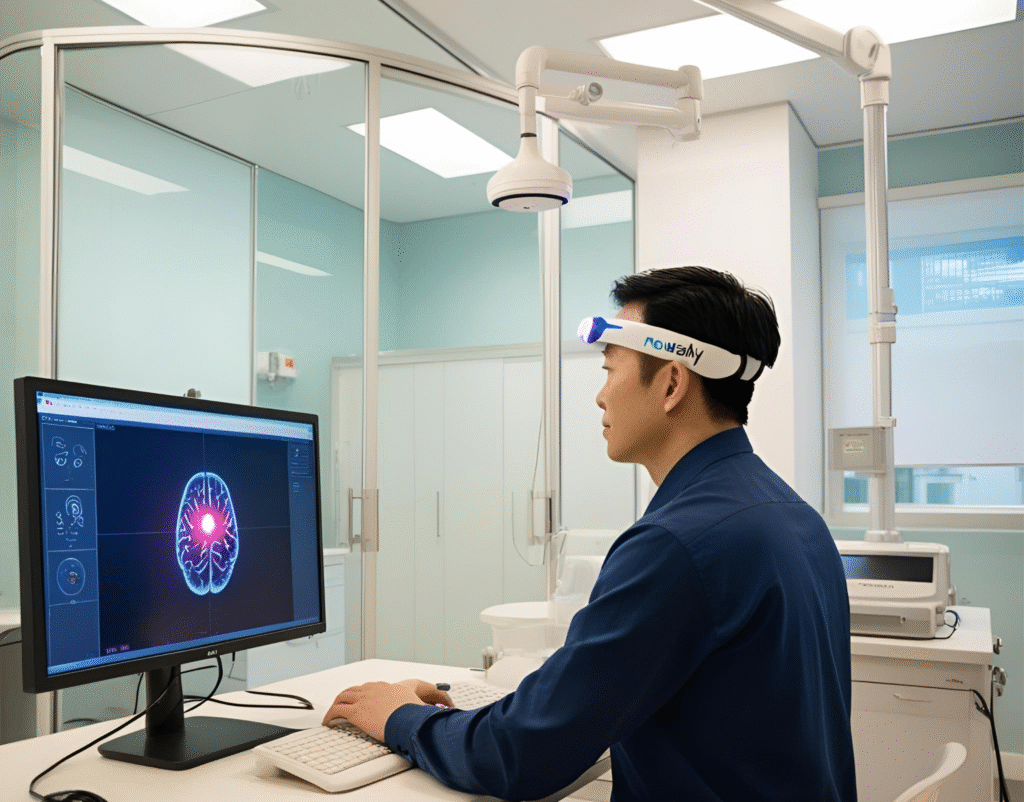
Neurofeedback is a form of biofeedback. Small sensors on your scalp record the electrical activity of your brain (EEG) – painlessly, and without sending anything into your body. A computer translates these signals into images or sounds. When your brain shows patterns associated with calm, focused attention, the feedback changes: the music becomes clearer, for example, or an image grows brighter.
In this way, you gradually learn to recognise these states for yourself – and to find your way back to them more easily, even without the equipment.
Neurofeedback is used in research and in some clinical settings. For many applications, however, the scientific evidence is still mixed. In my practice, I use it not as a treatment, but as a tool for relaxation, stress prevention and self-awareness.
What Is Meditation in This Context?
Meditation is the conscious practice of attention – for example by focusing on your breath, your body or a kind inner attitude. In our sessions, we work with simple, accessible forms such as mindfulness (gently anchoring your attention in the present moment), the body scan (sensing your body step by step), loving-kindness meditation (cultivating a friendly, compassionate attitude towards yourself and others) and guided meditations, in which I accompany you with my voice. No previous experience is needed.
How Does a Session Work?
- Initial conversation. We talk about what brings you here and what you would like to work on – for example, switching off more easily or getting started with meditation.
- Preparation. I explain the equipment and place the sensors. You sit comfortably; nothing about this is painful.
- Meditation with feedback. You meditate, guided or on your own, while the feedback shows you how your state changes.
- Reflection. Afterwards, we look at your experience together and choose simple exercises you can continue at home.
A session lasts about 60 minutes.
What Neurofeedback & Meditation Can Support
The combination can support you in relaxing and preventing stress – noticing tension earlier and finding your own ways back to calm. It can make it easier to get started with meditation, because the feedback helps you understand what a calm, focused state feels like. It can strengthen your self-awareness of thoughts, feelings and body signals, and help you practise focus in a structured way.
Many people find the visible feedback motivating. What you take away from it is individual – there are no guaranteed results.
Who Is It For?
This approach is for you if you would like to learn to switch off more easily, if you want to start meditating but find it difficult on your own, or if you already meditate and would like to explore your practice from a new angle. It also suits people who enjoy combining technology with personal development and are looking for a calm, self-paced way to prevent stress.
Important to Know
Neurofeedback and meditation are offered in my practice as coaching and relaxation methods. They are not medical or psychotherapeutic treatment, do not replace a doctor or therapist, and are not used to diagnose or treat any condition – including ADHD, anxiety disorders or depression. If you are currently receiving medical or psychotherapeutic treatment, please talk to your doctor or therapist before starting.
Please let me know beforehand if you have epilepsy or have ever had a seizure, are pregnant, have a pacemaker or another implanted electronic device, or take medication that affects the nervous system. In these cases, we will clarify together – if necessary with your doctor – whether and how the method is suitable for you.
Meditation can sometimes bring up strong feelings or memories. You decide at every moment how far you want to go, and we can pause at any time. If you are in an acute crisis, please seek immediate support; in an emergency, call 112.
Find Out More
Would you like to find out whether neurofeedback and meditation are right for you? In a free discovery call, we will talk about what is on your mind and whether this approach could be a good fit. Neurofeedback sessions take place in person at my practice in Ravda; guided meditation is also possible online. Sessions are held in German or English.