
Grief Support – Accompanying You After Loss
Compassionate • Patient • At Your Pace
Online or in person in Ravda, near Nessebar
When someone you love dies, the world changes. Grief is not a problem to be solved – it is a natural response to loss, and it deserves time, space and someone who truly listens. I accompany people through grief online in English and German, and in person at my practice in Ravda, Bulgaria.
When Grief Support Can Help
Grief has many faces. You are welcome to reach out if, for example:
- you have lost your partner, a parent, a child, a sibling or a close friend
- the death was sudden, or came after a long illness
- anniversaries, birthdays or holidays bring the pain back
- a loss from many years ago suddenly feels close again
- people around you expect you to “move on”, but you are not ready
- you feel alone with your grief and would like to talk to someone outside your family
There is no “right” way to grieve and no fixed timetable. We go at your pace.
Grieving Far From Home
Many people I support live abroad – as expats in Bulgaria or elsewhere in Europe. Losing someone while living far away brings its own challenges: perhaps you could not say goodbye, the funeral took place without you, or the people around you never knew the person you have lost. Your grief can feel out of step with the language and everyday life around you.
I live and work in Bulgaria and spend part of each year in Germany, so I know from my own experience what life between two countries feels like. With me, you can grieve in your own language – German or English – with someone who understands both worlds.
How I Accompany You
Grief support is not a quick fix. It is a path we walk together over several weeks or months – as often as feels right for you, for example every one to three weeks. Each session lasts 60 minutes.
Our sessions can include:
- space to tell your story and to talk about the person you have lost – as often as you need
- understanding grief: why it comes in waves, and why feelings such as anger, guilt or even relief are part of it
- finding what gives you strength and stability in everyday life
- rituals and ways to stay connected with the person you have lost
- small, manageable steps back into daily life – without pressure
- if it feels right for you: gentle methods from NLP or Wingwave coaching to ease particularly distressing memories
You decide what we talk about and how fast we go.
Grief Support or Crisis Support?
My Experience
I have been accompanying people through grief since 2008. From around 2010, I volunteered with the German Red Cross in crisis intervention, and in 2014 I completed my training in emergency pastoral care (crisis intervention). I hold a Master of Science in Social Sciences with a focus on social psychology and work as a psychological counsellor, Life Coach, and Wingwave and NLP coach.
Over the years, I have learned one thing above all: grief does not need to be fixed – it needs to be witnessed.
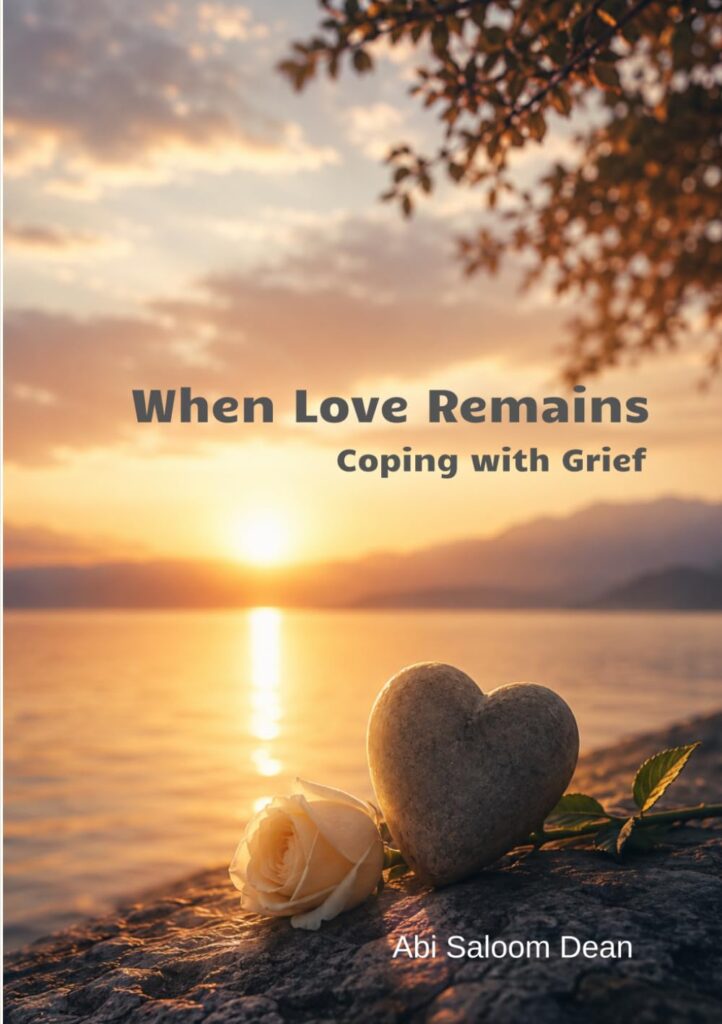
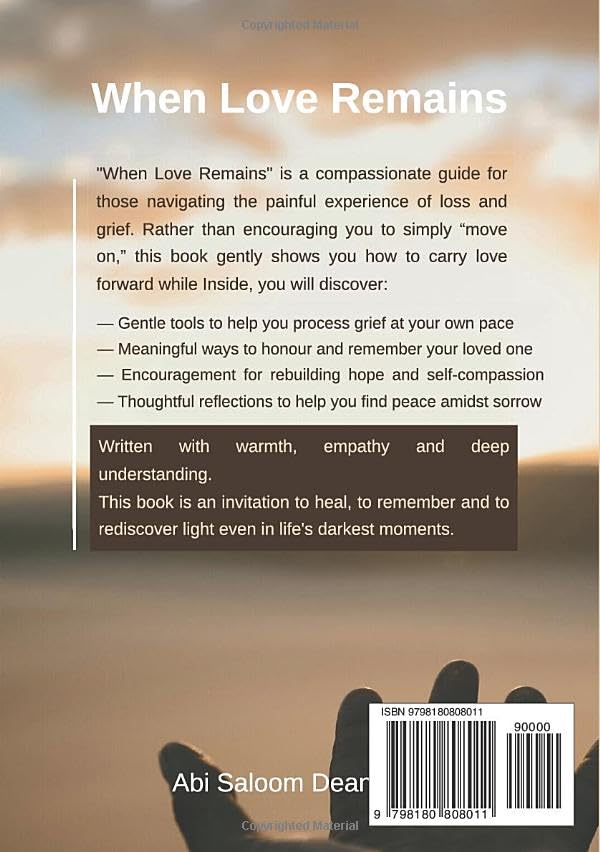
The Book: When Love Remains
Together with my sister, Rehana John, I wrote When Love Remains – Coping with Grief, a compassionate companion for anyone who has lost a loved one. Across 15 chapters, it explores understanding grief, self-compassion, coping in everyday life and finding meaning again. Available as a Kindle eBook in English.
Fees & Format
- Session length: 60 minutes
- Fee: €95 per session
- Online by video, or in person in Ravda, Bulgaria
- Language: English or German
- The first conversation is free of charge
FAQs
Is grief an illness?
No. Grief is a natural and healthy response to loss. It can be very painful and last a long time, but it is not a disorder. Grief support helps you find your way through it – it does not “treat” it.
How long does grief last?
There is no fixed timeline. For many people, the most intense phase eases over months, but grief can return in waves for years, especially on special dates. That is normal.
Is grief support the same as therapy?
No. I offer psychological counselling and coaching, not psychotherapy, and I do not make diagnoses. If I feel that therapeutic support would help you more, I will tell you openly and help you find the right next step.
Can I come to you even if the loss was many years ago?
Yes. Some losses only come to the surface much later – for example, after another change in life. It is never too late to give your grief space.
Does grief support work online?
Yes. Many people find it easier to talk about grief from the familiar surroundings of their own home. All you need is a quiet place and a stable internet connection.
Important to Know
Grief support is not an emergency service and does not replace medical or psychotherapeutic treatment. If your grief makes everyday life impossible over a long period, or if you have thoughts of no longer wanting to live, please contact a doctor or psychotherapist.
In an emergency, call 112. In Germany, the TelefonSeelsorge is available day and night, free of charge: 0800 111 0 111 or 0800 111 0 222. In other countries, please contact your local crisis line.
Request an Appointment
Whenever you feel ready, I am here. In a free first conversation, we can get to know each other and see whether grief support with me feels right for you.